Buffalo, New York, is well known for its cold winters and significant snowfall. For homeowners, business owners, and property managers, preparing for snow is an important part of maintaining a safe and accessible property throughout the winter season. Heavy snow can quickly cover driveways, sidewalks, parking areas, entrances, and access roads, making regular snow management essential.
Professional snow plowing is more than simply pushing snow from one location to another. Effective winter property maintenance involves understanding snowfall patterns, choosing appropriate equipment, clearing snow strategically, managing ice, protecting landscaping, and responding quickly when conditions become difficult.
For property owners looking for dependable winter maintenance, working with an experienced local landscaping and snow service can make snow management more organized and predictable. This guide explains what property owners should know about planning, scheduling, equipment, safety, and seasonal snow maintenance in Buffalo.
Understanding Buffalo’s Winter Snow Conditions
Buffalo’s winter weather can change rapidly. A relatively light snowfall can become a major accumulation when several storms occur close together. Wind can also create drifting, while freezing temperatures can turn compacted snow into hard ice.
Snowfall does not affect every property in the same way. A residential driveway, commercial parking lot, apartment complex, and large retail property may each require different equipment and clearing strategies.
Some important winter factors include:
- Total snowfall accumulation
- Snowfall intensity
- Wind and drifting
- Temperature changes
- Freeze-thaw cycles
- Ice formation
- Property size
- Traffic volume
- Available snow storage areas
- Accessibility requirements
Planning around these conditions helps property owners avoid waiting until a major storm has already created hazardous conditions.
Why Professional Snow Plowing Matters
Removing snow from a property can be physically demanding and time-consuming. Larger properties can also require specialized equipment and a carefully organized clearing sequence.
Professional snow services can help property owners maintain access during and after significant storms. A planned service approach may include monitoring weather conditions, prioritizing high-traffic areas, clearing accumulated snow, and addressing ice when necessary.
For many Buffalo properties, Snow Plowing Buffalo NY services can be part of a broader winter maintenance plan rather than an isolated response after every storm.
Professional snow management can provide several practical benefits:
- Faster clearing of large areas
- Reduced physical effort for property owners
- Better access to driveways and entrances
- More organized snow storage
- Improved pedestrian accessibility
- Consistent winter maintenance
- Reduced disruption to commercial operations
- Better preparation for repeated storms
The exact service requirements will depend on the property, snowfall, accessibility needs, and agreement between the property owner and service provider.
Residential Snow Plowing for Buffalo Homes
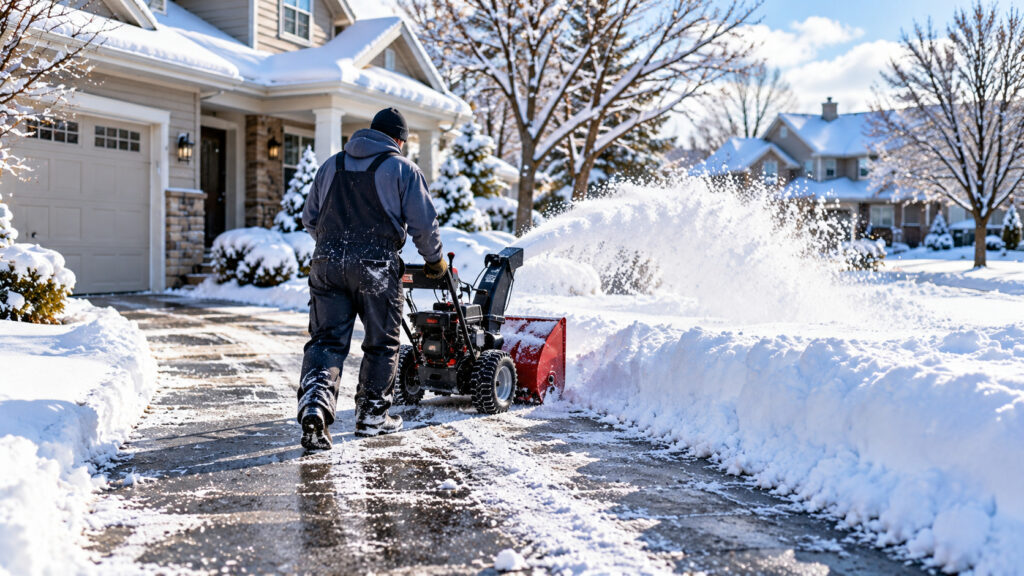
Residential properties often have several areas that need attention during winter. Driveways are usually the first priority, but walkways, steps, garage entrances, and access routes can also become difficult to navigate after a storm.
Snow should be managed before it becomes heavily compacted by vehicles and foot traffic. Repeated traffic can compress snow and make later removal more difficult.
A residential winter plan may include:
- Clearing the primary driveway.
- Opening access to garage doors.
- Clearing walkways and entrances.
- Creating appropriate snow storage areas.
- Monitoring areas where melting and refreezing may occur.
- Applying appropriate ice-control materials when needed.
- Checking the property again after major weather changes.
Homeowners should also consider where snow will be placed. Pushing snow into landscaping beds may damage plants, shrubs, edging, or hardscape features. Snow piles can also reduce visibility near driveways and intersections.
A well-planned residential approach balances accessibility with protection of the property’s landscaping and structures.
Commercial Snow Management in Buffalo
Commercial properties generally have more complex snow-clearing requirements than residential properties. A business may need to maintain parking areas, loading zones, sidewalks, entrances, employee access points, and emergency routes.
For commercial properties, Snow Removal Buffalo NY planning should be based on the property’s size, traffic patterns, operating hours, and access requirements.
A commercial snow plan may identify:
- Main customer entrances
- Employee entrances
- Parking lanes
- Accessible parking spaces
- Loading areas
- Fire lanes
- Dumpster access
- Delivery routes
- Pedestrian walkways
- Snow storage zones
Businesses should establish priorities before winter arrives. This allows snow-clearing crews to understand which areas require attention first during a storm.
For businesses that operate early in the morning, overnight snowfall can create additional challenges. A service schedule may need to account for opening times and expected snowfall accumulation.
Choosing the Right Snow-Clearing Equipment
Different properties require different equipment. Using a machine that is too small can increase clearing time, while equipment that is too large may be unsuitable for narrow residential areas.
Common snow-clearing equipment includes:
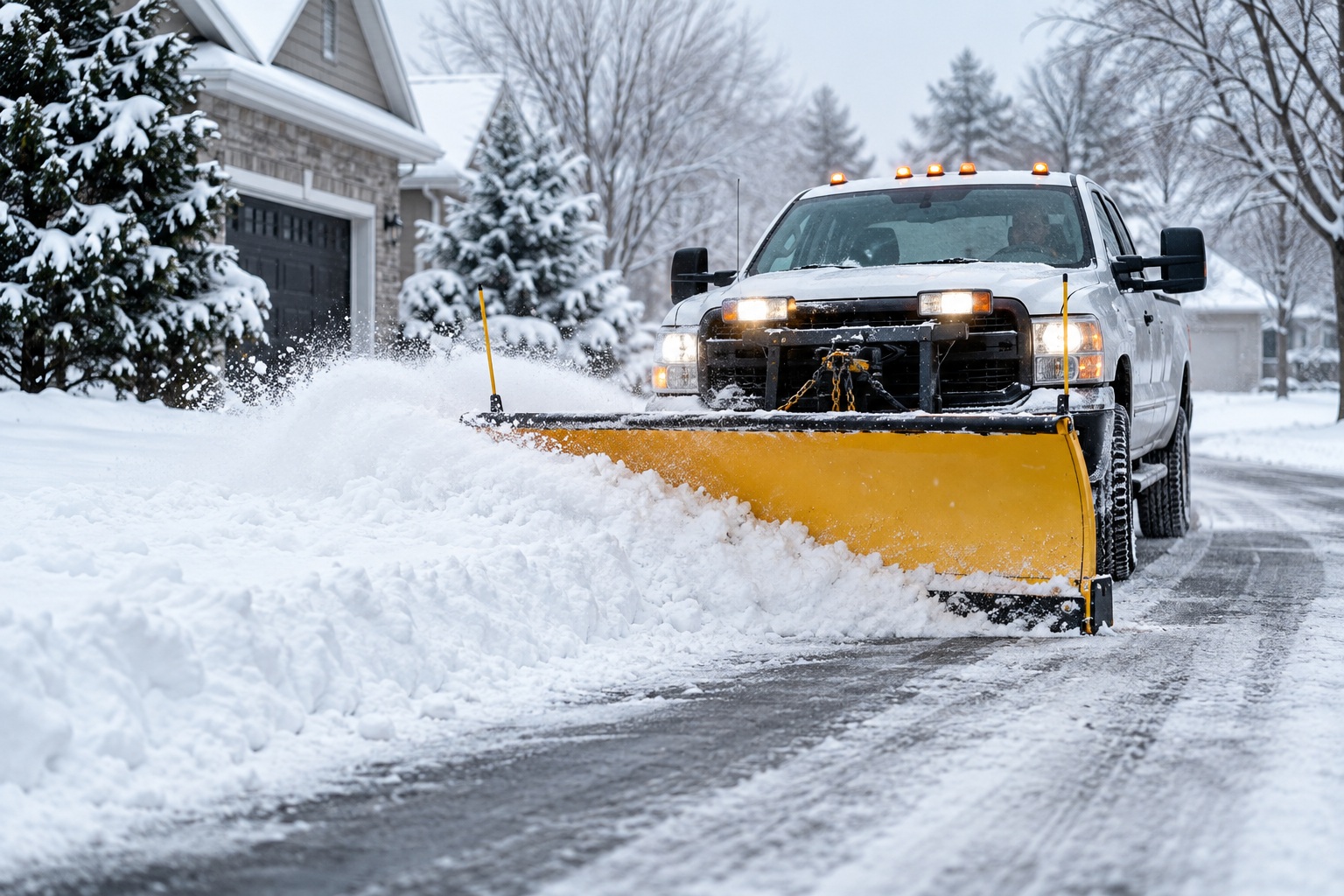
Pickup Trucks With Plows
Plow-equipped trucks are commonly used for driveways, parking areas, private roads, and larger properties. They can move significant amounts of snow efficiently.
Skid Steers
Skid steers are useful for larger snow piles, tight spaces, and areas where maneuverability is important. Attachments can be changed depending on the clearing requirements.
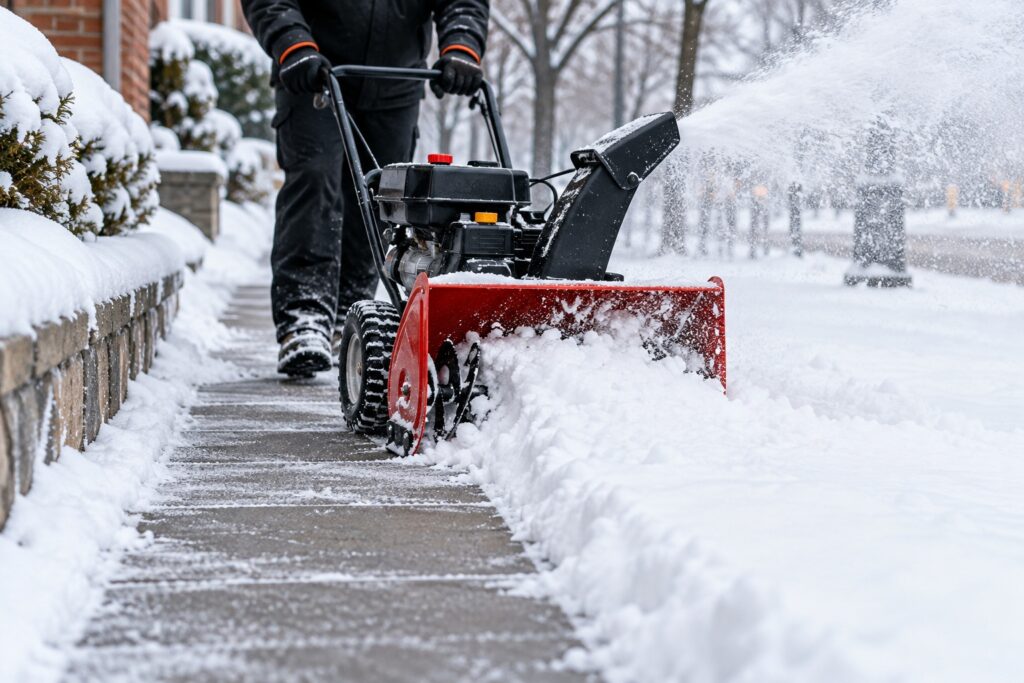
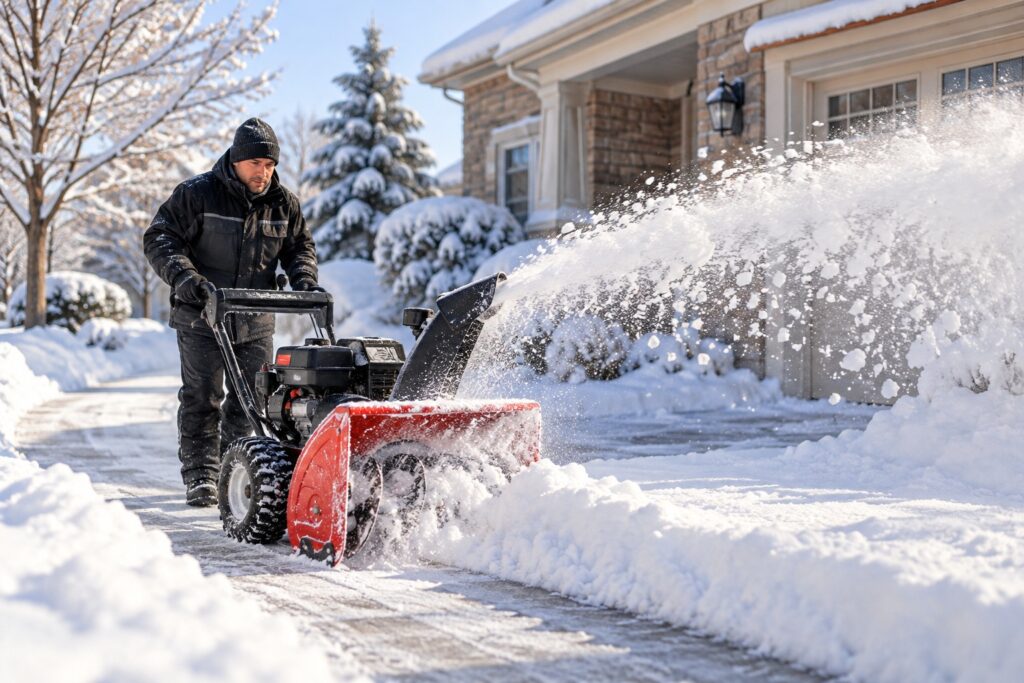
Snow Blowers
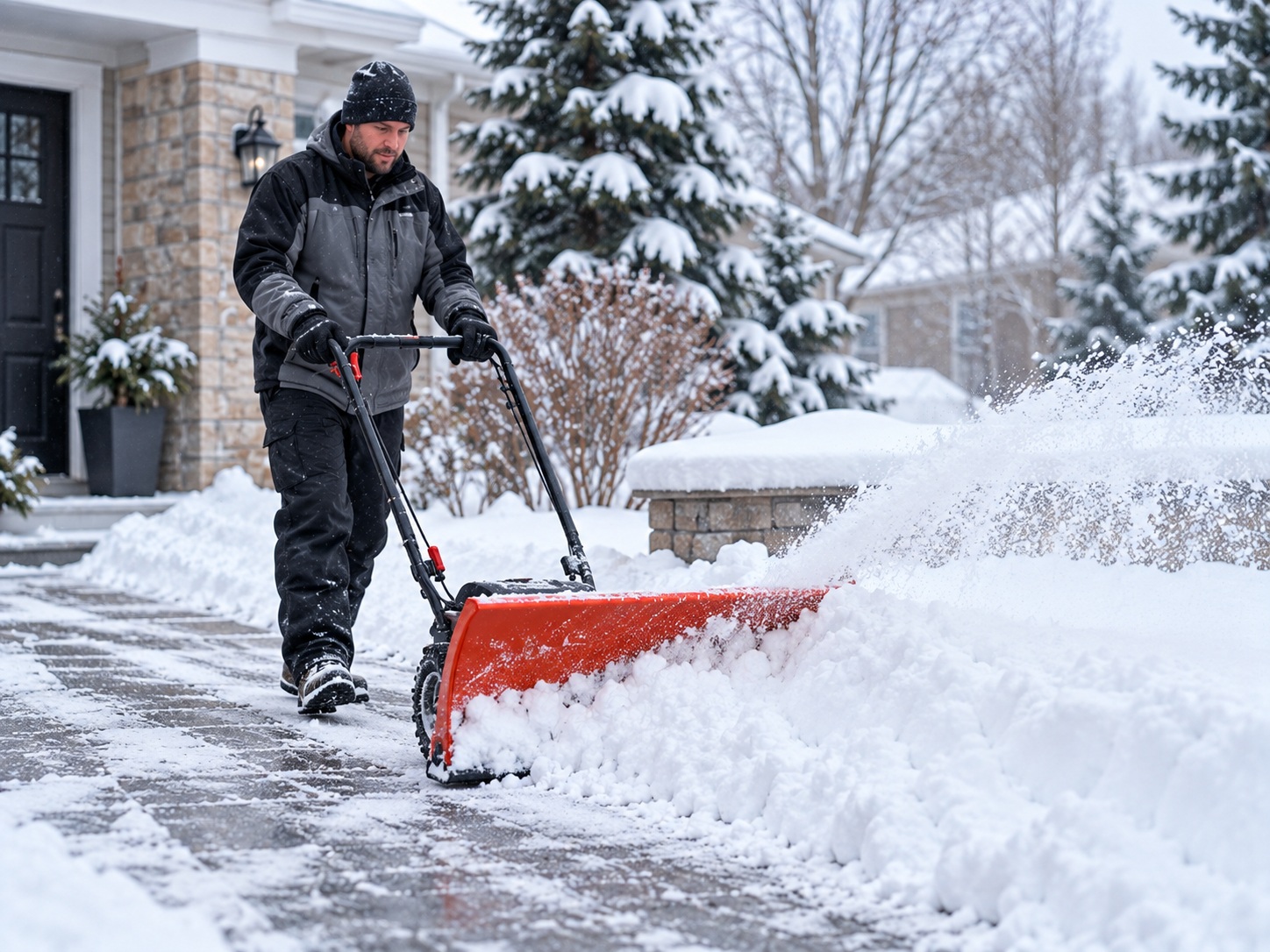
Snow blowers are useful for sidewalks, narrow paths, entrances, and areas where a truck-mounted plow cannot operate efficiently.
Shovels and Hand Tools
Manual tools remain important for steps, doorways, tight corners, and areas around obstacles.
Ice-Control Equipment
Spreaders can be used to distribute appropriate deicing or traction materials across parking areas and walkways.
Equipment selection should always reflect the property rather than simply choosing the largest available machine.
When Should Snow Plowing Begin?
One common question property owners have is whether snow should be removed during a storm or after snowfall stops.
The answer depends on snowfall intensity, accumulation, temperature, traffic, and property requirements.
For a light snowfall, clearing may be practical after the storm. During a major storm, multiple passes may be more effective. Waiting until all snowfall has stopped can allow vehicles and foot traffic to compact the snow.
Snow Plowing Buffalo NY planning may therefore involve several clearing stages during a prolonged storm.
Factors that may influence timing include:
- Expected snowfall totals
- Storm duration
- Snowfall rate
- Property traffic
- Temperature
- Wind conditions
- Business operating hours
- Accessibility requirements
- Snow storage capacity
The goal is not necessarily to remove every snowflake immediately. The goal is to maintain reasonable access and safety while managing snow efficiently.
Preparing Your Property Before Winter
Preparation can make winter snow management much easier.
Before the first major storm, property owners should inspect the property and identify potential problem areas.
Create a Winter Property Checklist
Check:
- Driveway condition
- Sidewalk condition
- Drainage areas
- Parking lot entrances
- Lighting
- Curbs
- Landscape borders
- Retaining walls
- Utility covers
- Fire hydrant access
- Drainage grates
- Snow storage locations
Marking hidden obstacles can also help reduce the risk of equipment damage.
Property owners should communicate the location of low barriers, decorative features, irrigation components, and other obstacles to the snow service provider.
Planning Snow Storage Areas
Snow does not disappear simply because it has been pushed out of the way. Large properties need enough space to store accumulated snow.
Poorly planned snow storage can create several problems. Snow piles may block visibility, reduce parking capacity, interfere with drainage, or damage nearby landscaping.
When selecting a snow storage area, consider:
- Distance from building entrances
- Drainage
- Visibility
- Pedestrian movement
- Parking capacity
- Landscaping
- Emergency access
- Future snowfall
On commercial properties, snow storage should ideally be considered before winter rather than after the first major storm.
Managing Ice After Snowfall
Snow removal and ice management are related but separate tasks.
Even after snow is cleared, melting and refreezing can create slippery surfaces. This is especially common when temperatures fluctuate around freezing.
Areas that deserve additional attention include:
- Steps
- Sloped driveways
- Walkways
- Building entrances
- Parking lot transitions
- Shaded areas
- Drainage locations
- Areas exposed to repeated foot traffic
Ice-control products should be selected and applied according to the surface, weather conditions, and product instructions.
Excessive application does not necessarily provide better results. Overuse of deicing materials may affect vegetation, concrete, metal surfaces, and nearby water systems.
A thoughtful winter maintenance program considers both snow removal and ice management.
Snow Plowing Near Residential Landscaping
Snow-clearing equipment operates close to lawns, gardens, trees, shrubs, fences, retaining walls, and other landscape features.
Improper snow placement can create avoidable landscaping problems.
For homeowners searching for Snow plowing near me, it is useful to consider whether the service provider understands the relationship between winter snow management and landscape protection.
Snow service providers should be informed about:
- Decorative landscape borders
- Planting beds
- Shrubs
- Young trees
- Retaining walls
- Pavers
- Irrigation components
- Landscape lighting
- Outdoor structures
Snow should be placed in locations that minimize pressure on plants and hardscape features whenever practical.
Protecting Trees and Plants From Winter Snow
Heavy snow can place additional weight on branches, especially when snow is wet and compact.
Property owners should inspect trees before winter for:
- Dead branches
- Weak limbs
- Cracked branches
- Structural defects
- Overhanging limbs
- Branches near buildings
- Branches near power lines
Tree maintenance should be handled carefully, particularly when branches are near electrical infrastructure. Homeowners should not attempt hazardous tree work around power lines.
Winter landscaping maintenance and snow management can work together to reduce avoidable property problems.
Common Snow Plowing Mistakes
Even simple snow-clearing work can create problems when it is poorly planned.
Waiting Too Long
Allowing snow to become heavily compacted can make removal more difficult.
Blocking Drainage
Snow piles should not unnecessarily block drainage points because melting snow needs somewhere to go.
Creating Visibility Problems
Large piles near intersections, driveways, and entrances can restrict visibility.
Damaging Landscaping
Pushing snow directly onto fragile landscape features may cause damage.
Ignoring Pedestrian Areas
Parking areas may be clear while walkways remain difficult to navigate.
Using Too Much Deicing Material
More product is not automatically better. Follow the product’s application instructions.
Failing to Plan for Repeat Storms
Buffalo winters can include multiple snow events. A single storm plan may not be enough for the entire season.
How to Choose a Snow Service Provider
Property owners should compare service providers based on their specific property needs rather than choosing solely on price.
Consider asking:
- What areas are included in the service?
- When does service begin during a storm?
- Is snow clearing performed more than once during major storms?
- How are snow piles handled?
- Is ice management available?
- What equipment is used?
- How are landscaping features protected?
- How are emergency access areas handled?
- Is service available for residential or commercial properties?
- What happens during unusually large snow events?
Clear communication can help prevent misunderstandings during stressful winter conditions.
Snow Plowing Near Me: What Local Property Owners Should Consider
A search for Snow plowing near me can produce many local service options. However, proximity alone does not tell you whether a provider is suitable for your property.
Property owners should consider service area, availability, equipment, experience with similar properties, and the specific services included in the agreement.
A good service arrangement should clearly explain expectations before winter begins.
For example, a residential homeowner may need driveway clearing and walkway access, while a commercial property may require a detailed plan covering parking areas, entrances, pedestrian routes, loading zones, and snow relocation.
Understanding your requirements first makes it easier to evaluate available providers.
Creating a Winter Snow Management Plan
A written plan can make snow management more consistent.
Your plan can include:
1. Property Map
Identify driveways, parking areas, sidewalks, entrances, emergency routes, and snow storage locations.
2. Priority Areas
Determine which areas should be cleared first.
3. Service Triggers
Establish the conditions that require service, such as a certain accumulation level or storm duration.
4. Equipment Requirements
Determine whether the property requires trucks, loaders, blowers, shovels, or other equipment.
5. Ice Management
Identify areas where ice is most likely to develop.
6. Communication
Establish how the property owner and service provider will communicate during major storms.
7. Post-Storm Inspection
Inspect the property after service to identify remaining snow, ice, drainage issues, or blocked access.
Benefits of Seasonal Snow Planning
Planning ahead provides several practical advantages.
- Better preparation for major storms
- More predictable winter maintenance
- Reduced last-minute scheduling problems
- Better snow storage planning
- Improved access to important areas
- Easier communication with service providers
- Greater protection for landscaping
- Better coordination between snow and landscaping services
Seasonal planning is particularly useful for businesses that need to remain accessible throughout winter.
How Snow Removal Supports Property Safety
Snow and ice can make ordinary property movement more difficult. Clearing pathways and access areas helps maintain usability during winter conditions.
However, snow removal should not be treated as a guarantee against slips, falls, or other incidents. Weather conditions can change quickly, and property owners should continue inspecting their properties after snow-clearing work.
A responsible winter maintenance approach combines:
- Timely snow clearing
- Appropriate ice management
- Regular inspections
- Adequate lighting
- Clear walkways
- Proper snow storage
- Ongoing weather awareness
Snow Removal for Parking Lots
Parking lots require special consideration because vehicles and pedestrians share the same space.
After a significant storm, a parking lot may need to be cleared in stages. The service provider may prioritize entrances and driving lanes before moving snow toward designated storage areas.
Snow Removal Buffalo NY services for parking lots can be particularly useful for commercial properties where access needs to remain available.
Parking lot planning should consider:
- Traffic direction
- Parking capacity
- Accessible parking spaces
- Pedestrian routes
- Loading zones
- Fire lanes
- Snow pile locations
- Drainage
A well-organized parking lot plan can make repeated winter storms easier to manage.
Residential Driveway Snow Management
Driveways can become difficult to navigate when snow accumulates quickly.
Homeowners should consider whether their driveway has:
- A steep slope
- Narrow access
- Limited snow storage
- Nearby landscaping
- Retaining walls
- Drainage concerns
- Multiple entrances
- Limited turning space
These characteristics can influence how snow should be cleared and where it should be placed.
For households that need consistent winter access, arranging a service plan before the season begins can reduce uncertainty during major storms.
Preparing for Large Snow Events
Major snow events require additional planning.
Before a significant storm, property owners should:
- Move vehicles away from priority clearing areas.
- Mark hidden obstacles.
- Secure outdoor items.
- Identify emergency access routes.
- Confirm snow storage locations.
- Check drainage areas.
- Communicate service expectations.
- Monitor weather updates.
- Avoid unnecessary travel during dangerous conditions.
During the storm, property owners should give snow-clearing equipment adequate space to operate safely.
Working With a Landscaping and Snow Service
A landscaping company that also provides winter maintenance can understand the property throughout the year.
This can be helpful because the same property may require different care during different seasons.
Spring and summer may involve lawn maintenance, planting, pruning, landscape construction, or hardscape care. Fall can involve leaf cleanup and winter preparation. Winter then brings snow and ice management.
A year-round approach can help maintain continuity in property care.
For Buffalo property owners, Snow Plowing Buffalo NY services can therefore be considered as one component of broader seasonal property maintenance.
Environmental Considerations
Responsible snow management should also consider where snow and deicing materials eventually go.
Snow piles may contain dirt, vehicle fluids, debris, and deicing residue collected from paved surfaces. When snow melts, these materials can enter drainage systems.
Property owners can reduce unnecessary environmental impact by:
- Using deicing products according to instructions
- Avoiding excessive application
- Selecting suitable snow storage locations
- Keeping drainage paths clear
- Removing debris before winter
- Maintaining healthy landscaping around drainage areas
Responsible application practices can help balance winter safety with property and environmental considerations.
Final Winter Preparation Checklist
Before Buffalo’s winter weather becomes severe, review the following checklist:
- Inspect the driveway.
- Inspect sidewalks and steps.
- Identify snow storage locations.
- Mark hidden obstacles.
- Check drainage areas.
- Inspect trees for damaged branches.
- Identify priority entrances.
- Review parking lot access.
- Plan pedestrian routes.
- Establish an ice-management strategy.
- Confirm service expectations.
- Prepare equipment or arrange professional service.
- Keep emergency access routes clear.
- Monitor weather conditions throughout the season.
Preparation is one of the simplest ways to make winter property management more manageable.
Frequently Asked Questions
How often should snow be plowed in Buffalo?
The appropriate frequency depends on snowfall intensity, accumulation, temperature, traffic, and the type of property. During a prolonged storm, multiple clearing passes may be necessary rather than waiting until the storm ends.
Is it better to plow during or after a snowstorm?
It depends on the circumstances. During a heavy or prolonged storm, clearing more than once may prevent excessive accumulation and compaction. For lighter snowfall, a post-storm clearing may be sufficient.
What is the difference between snow plowing and snow removal?
Snow plowing generally involves moving accumulated snow from driveways, roads, or parking areas to another location on the property. Snow removal may involve transporting snow away from the property when available storage space is insufficient.
How can I find reliable Snow plowing near me?
Start by identifying your property’s specific needs. Then compare local providers based on service area, equipment, scheduling, included services, experience, communication, and snow storage options.
Does snow plowing damage landscaping?
It can if snow is repeatedly pushed onto vulnerable plants, landscape structures, or hardscape features. Proper planning and communication can help reduce the risk.
Should sidewalks be cleared separately?
In many cases, yes. Sidewalks and narrow pedestrian paths often require equipment or techniques different from those used for driveways and parking lots.
How should businesses prepare for snow?
Businesses should identify priority entrances, parking lanes, pedestrian routes, loading zones, emergency access areas, and snow storage locations before winter begins.
What happens when there is nowhere to store more snow?
A property may need snow relocation or hauling when existing storage areas become full. This should be discussed with the service provider before major storms.
Can snow be pushed against a building?
Snow should be placed carefully to avoid creating drainage, access, visibility, or structural concerns. The appropriate location depends on the property’s design.
Does salt remove snow?
Deicing materials are primarily used to help manage ice and improve traction. They should not be considered a replacement for physical snow removal.
How can homeowners prepare their driveway for winter?
Homeowners can inspect the surface, repair significant damage, identify drainage issues, remove obstacles, mark edges, and establish a snow storage area before the season begins.
Should trees be inspected before winter?
Yes. Inspecting trees for dead, damaged, or weak branches can help identify potential maintenance needs before heavy snow and ice place additional loads on branches.
Is commercial snow management different from residential service?
Yes. Commercial properties often have larger areas, higher traffic volumes, multiple entrances, parking requirements, pedestrian routes, and specific operating schedules.
Conclusion
Buffalo winters can create challenging conditions for homeowners and businesses, but effective preparation can make snow management much more organized. From residential driveways and sidewalks to commercial parking lots and access routes, each property requires a strategy suited to its size, layout, traffic, and winter conditions.
Professional Snow Removal Buffalo NY services can help property owners manage accumulated snow and maintain access during challenging winter weather. The most effective approach combines preparation, appropriate equipment, thoughtful snow placement, ice management, regular inspections, and clear communication.
Whether you manage a home, commercial property, or larger landscape, preparing your snow plan before winter arrives can help reduce last-minute problems. If you are researching Snow plowing near me, focus on finding a provider that understands your property’s specific requirements and can clearly explain its winter service process.
With the right preparation and consistent maintenance, Buffalo property owners can approach the winter season with a more organized plan for managing snow, protecting landscaping, and keeping important areas accessible.